7 Best Mindset Coaches for Entrepreneurs in 2026
You can hit every revenue target and still feel like something invisible is steering your decisions. That gap between external wins and internal wiring is why founders stall, self-sabotage, and burn out. A mindset coach can close it, but only if you pick the right one.
This article breaks down seven coaches for entrepreneurs in 2026, starting with Eli Bowman, and gives you the criteria to evaluate any of them. You will learn what separates real unconscious reprogramming from motivation, how to match format and budget to your goals, and which option fits you best.
What to Look For in a Mindset Coach for Entrepreneurs
Selecting a mindset coach as an entrepreneur requires evaluating six critical dimensions: credentials, methodology, personalization, format, accountability, and pricing. Each dimension shapes whether the coaching relationship actually moves your business forward or simply feels productive in the moment.
The right coach helps you identify limiting beliefs, reframe setbacks, and build the resilience that sustained company growth demands. The wrong fit can waste months and thousands of dollars. A structured evaluation keeps the decision grounded in evidence rather than charisma.
Use the framework below to compare coaches side by side. Score each dimension honestly, because the strongest credentials mean little if the format or communication style does not suit how you actually work.
1. Credentials and certifications. Formal training signals a baseline of professional standards. Relevant credentials include International Coaching Federation (ICF) certification, neuro-linguistic programming (NLP) practitioner status, and graduate degrees in psychology or counseling. These matter because coaching is unregulated in most markets, so anyone can claim the title without training.
Ask what specific certification the coach holds, when it was earned, and whether it required supervised practice hours. A psychology background often adds depth for founders dealing with founder burnout or anxiety, while business coaching credentials point to commercial experience.
2. Methodology and approach. Coaches work through different lenses, and the method should match your challenge. Common approaches include:
- Cognitive reframing, which targets how you interpret setbacks and risk
- Subconscious reprogramming, which addresses deep-seated patterns and self-sabotage
- Neuroscience-based coaching, which draws on brain research around habit formation and stress response
- NLP techniques, which focus on language patterns and behavioral change
- Positive psychology, which builds strengths, success habits, and an abundance mentality
Ask for a sample session or a recorded walkthrough of how a typical engagement unfolds. If you struggle with imposter syndrome, a purely goal-setting approach may miss the root cause. If your issue is time management and productivity systems, a tactical methodology may serve you better.
3. Personalization and fit. Generic programs rarely address the specific pressures founders face: fear of failure, risk tolerance, decision-making under uncertainty, and the isolation of leadership. A strong coach asks detailed questions about your business stage, team size, and recurring emotional patterns before proposing a plan.
Fit also covers communication style. Some entrepreneurs want direct challenge; others respond to reflective questioning. Request a discovery call and pay attention to whether the coach listens more than they pitch. Emotional intelligence in the coach matters as much as any certificate.
4. Format and accessibility. Coaching now spans one-on-one sessions, group cohorts, online programs, and in-person intensives. Each format carries tradeoffs:
- One-on-one coaching offers full personalization but costs more per hour
- Group programs build peer accountability and cost less, though individual attention is diluted
- Online delivery removes geography as a barrier and fits irregular founder schedules
- In-person intensives create deep focus but demand travel time and higher fees
Consider your calendar reality. A weekly video call may suit a solopreneur, while a founder running a large team might prefer quarterly deep-dive sessions with async check-ins between them. Accessibility also includes time zone coverage and response windows.
5. Accountability and support structures. Mindset work fails without follow-through. Ask how the coach tracks progress between sessions. Strong structures include scheduled check-ins, written homework, journaling prompts, meditation practice assignments, and measurable goal setting.
An accountability partner dynamic works best when expectations are explicit. Clarify how many touchpoints you get per month, whether messaging support is included, and what happens if you miss a session. Vague commitments tend to produce vague results.
6. Pricing and return on investment. Costs vary widely. Digital tools and self-paced programs may start around $75, while intensive one-on-one coaching can exceed $10,000 for a multi-month engagement. Mid-range options typically fall between these poles.
Evaluate price against outcomes, not against the cheapest alternative. Ask what a typical client achieves and how progress is measured. Research suggests that clear goal setting and consistent accountability drive most of the value, so prioritize coaches who build both into their structure.
Ultimately, the best coach for an entrepreneur depends on unique goals and learning style. A founder seeking strategic thinking and visionary leadership development may thrive with an executive coaching background. Someone battling self-sabotage may need a practitioner skilled in subconscious reprogramming.
Compare at least three coaches across all six dimensions before committing. The strongest choice is the one whose credentials, method, format, and accountability model align with both your challenges and how you prefer to learn.
1. Eli Bowman - Best Overall
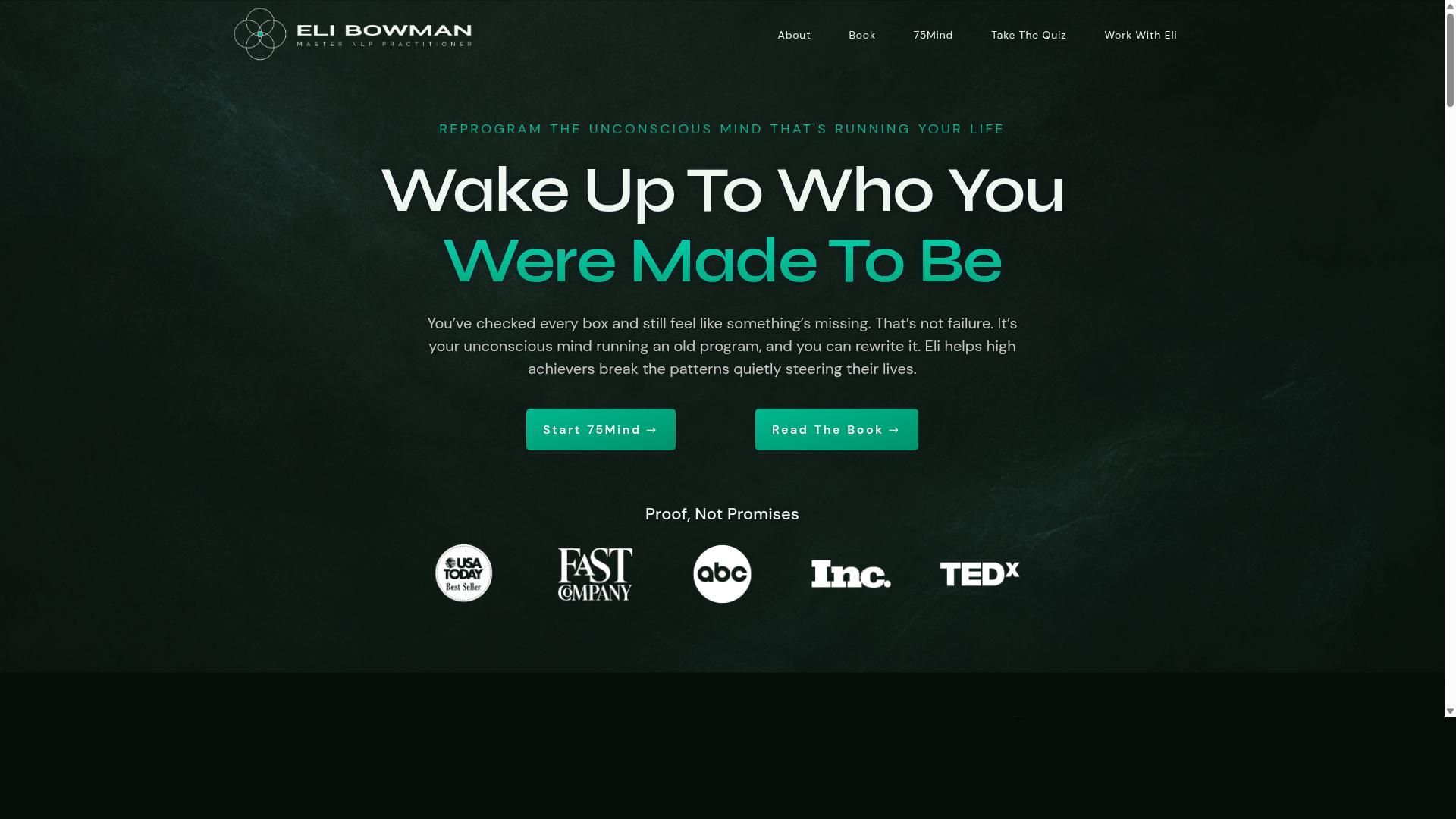
Eli Bowman combines a neuroscience-based approach with practical tools to help high-achieving entrepreneurs break unconscious patterns that hinder success. His work centers on subconscious reprogramming, a method that targets the hidden drivers behind self-sabotage, income ceilings, and the nagging sense that something is missing despite checking every external box.
That focus on the unconscious mind separates him from coaches who work mainly at the level of strategy, goals, and surface habits. He is a mindset keynote speaker, author, and NLP coach, and his audience tends to be high achievers, founders, and executives who have already built impressive results but keep colliding with the same internal walls.
Common struggles he addresses include limiting beliefs, fear of failure, imposter syndrome, and patterns of self-sabotage that quietly cap growth. Rather than treating these as character flaws, his approach frames them as learned programs that can be rewritten.
Bowman works with clients globally through digital offerings, which makes his coaching accessible regardless of location. His brand is operated by Movement Maker LLC, and his range of formats, from one-on-one sessions to live experiences, allows entrepreneurs to choose the level of support that fits their stage of business and life.
For founders weighing mindset coaching options in 2026, his combination of scientific framing and hands-on tools is what earns him the top spot in this roundup. The sections below break down his credentials, methodology, and pricing so you can judge the fit for yourself.
Credentials, Approach, and 75Mind Pricing
Eli Bowman's credentials include being a TEDx speaker, USA Today bestselling author, and Master NLP Practitioner certified by the American Board of Neuro-Linguistic Programming. Each of these shapes how he works with clients.
His Master NLP Practitioner certification informs a methodology built on neuro-linguistic programming, the study of how language and thought patterns shape behavior. Combined with a neuroscience-based view of subconscious reprogramming, this gives his coaching a structured, pattern-focused foundation rather than a purely motivational one.
His book, The Program, became a USA Today bestseller and covers reprogramming the unconscious mind. It serves as a written extension of the same philosophy he brings to coaching and speaking.
Bowman's product range covers several formats:
- One-on-one coaching for personalized insight into unconscious patterns
- Keynote speaking for events and organizations
- Retreats and live experiences for immersive work
- 75Mind, a 75-day digital mindset program
The 75Mind program is structured in four phases: Disruption (Days 1-18), Confrontation (Days 19-37), Rebuild (Days 38-60), and Momentum (Days 61-75). It builds around eight daily habits: tracking sleep, a morning gratitude practice, meditation or prayer, 30 minutes of intentional physical movement, at least 30 minutes of focused reading, daily social accountability, drinking 100 oz of water, and an evening journal entry.
Participants receive a guide PDF, a phase-by-phase roadmap, daily reflection prompts, rules and standards, and community access. Pricing is straightforward: 75Mind costs $75 as a one-time payment with instant access, while coaching and speaking engagements are quoted custom based on scope. For entrepreneurs who want an affordable entry point into this style of work, the digital program offers the lowest-commitment way to start.
2. Dr. Joe Dispenza
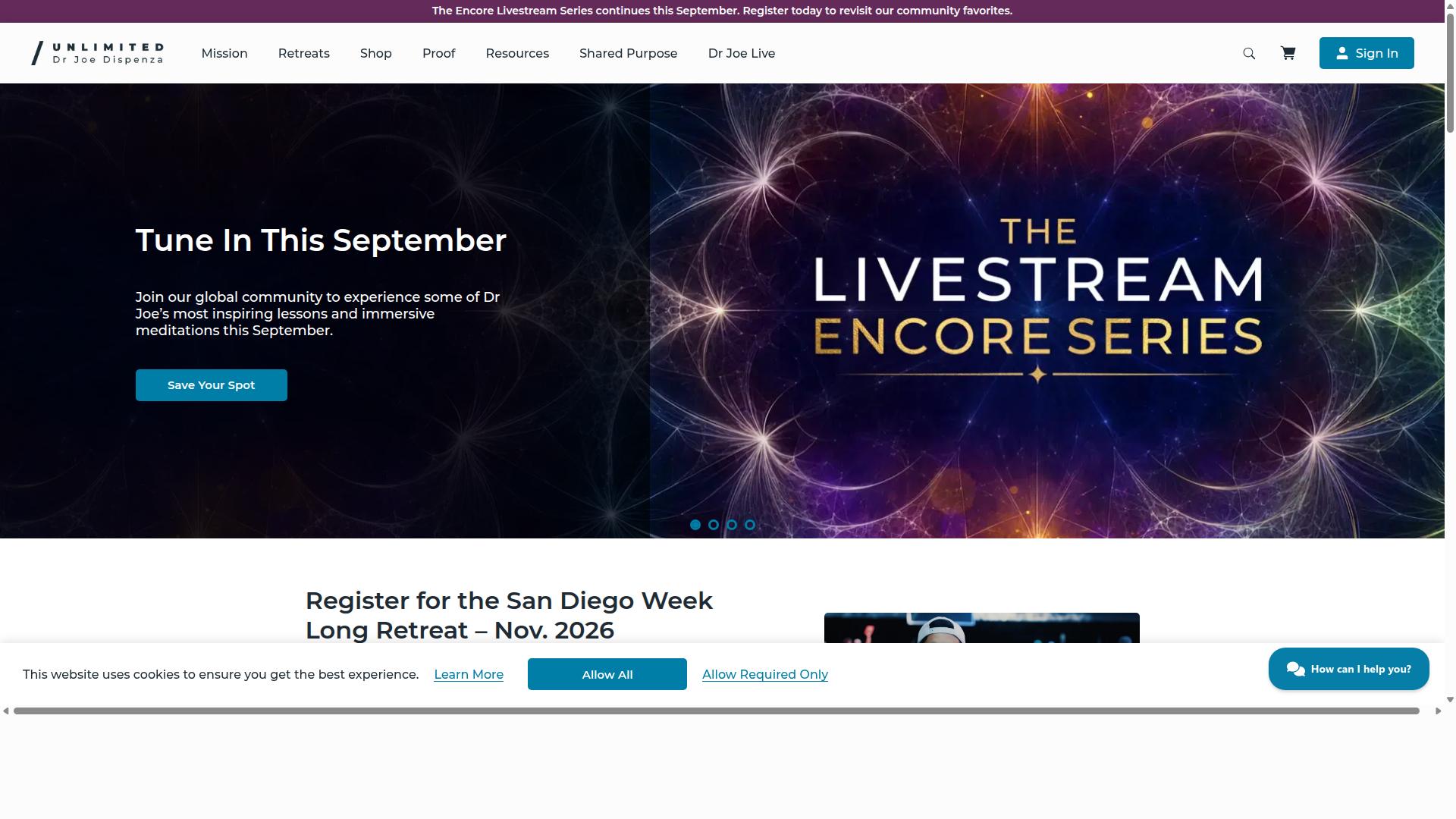
Dr. Joe Dispenza is a renowned author and speaker who blends neuroscience, epigenetics, and quantum physics to teach individuals how to rewire their brains for success. His work sits at the intersection of science and spirituality, a combination that resonates with founders who want more than surface-level motivation.
Before becoming a teacher, Dispenza practiced as a chiropractor and studied neuroscience, which shapes the research-driven language he uses in his books and events. For entrepreneurs drawn to mindset coaching with a scientific flavor, his background lends credibility that purely inspirational speakers often lack.
His central methodology focuses on meditation and mental rehearsal. The idea is that repeatedly imagining a desired outcome, while regulating emotional states, can shift brain chemistry and help break entrenched patterns.
In practice, this means long guided meditations, breathwork, and visualization exercises. Entrepreneurs dealing with limiting beliefs, self-sabotage, or chronic stress may find the approach useful for subconscious reprogramming.
Dispenza offers a range of formats, from books to live events to online programs. His best-known titles include Breaking the Habit of Being Yourself, which introduces readers to the link between thoughts, emotions, and habits.
- Books covering neuroplasticity, meditation, and behavior change
- Live workshops and retreats held in various cities and countries
- Online courses that guide participants through meditations and exercises
- Corporate and organizational training, such as the two-day online course Change Your Mind...Create New Results
The corporate program is the only global organizational training designed by Dispenza, hosted by certified consultant Andy Gowland-Douglas. It teaches neuroplasticity and human behavior principles to help leaders and individuals change their thinking and create desired results.
Participants in that program receive a workbook, a 30 Days to Genius Journal, downloadable audio files, four group coaching sessions, and a 1:1 follow-up. It suits business professionals, employees, employers, self-employed individuals, and entrepreneurs. Required coursework, the Progressive Online Course, costs $349 for unlimited access.
Pricing across his broader catalog varies widely. Smaller online offerings sit at the lower end, while multi-day live events and retreats can run from roughly $500 to $5,000 or more depending on location, length, and accommodation.
For entrepreneurs weighing the investment, the pros center on depth and scientific framing. The meditations are structured, the concepts build on each other, and the work targets emotional intelligence and stress regulation rather than just goal setting.
The cons are equally real. The approach demands a serious time commitment, often requiring daily meditation practice over weeks or months before results feel tangible. Founders in fast-scaling companies may struggle to protect that time.
Some participants also find the science-spirituality blend appealing, while others want strictly secular or business-focused coaching. For those in the first group, Dispenza's work can complement executive coaching by addressing the inner patterns behind decision-making and risk tolerance.
Overall, he is a strong fit for entrepreneurs who believe lasting change starts beneath the surface. Those seeking quick tactical fixes or accountability-driven goal setting may prefer a more direct coaching relationship.
3. Jack Canfield
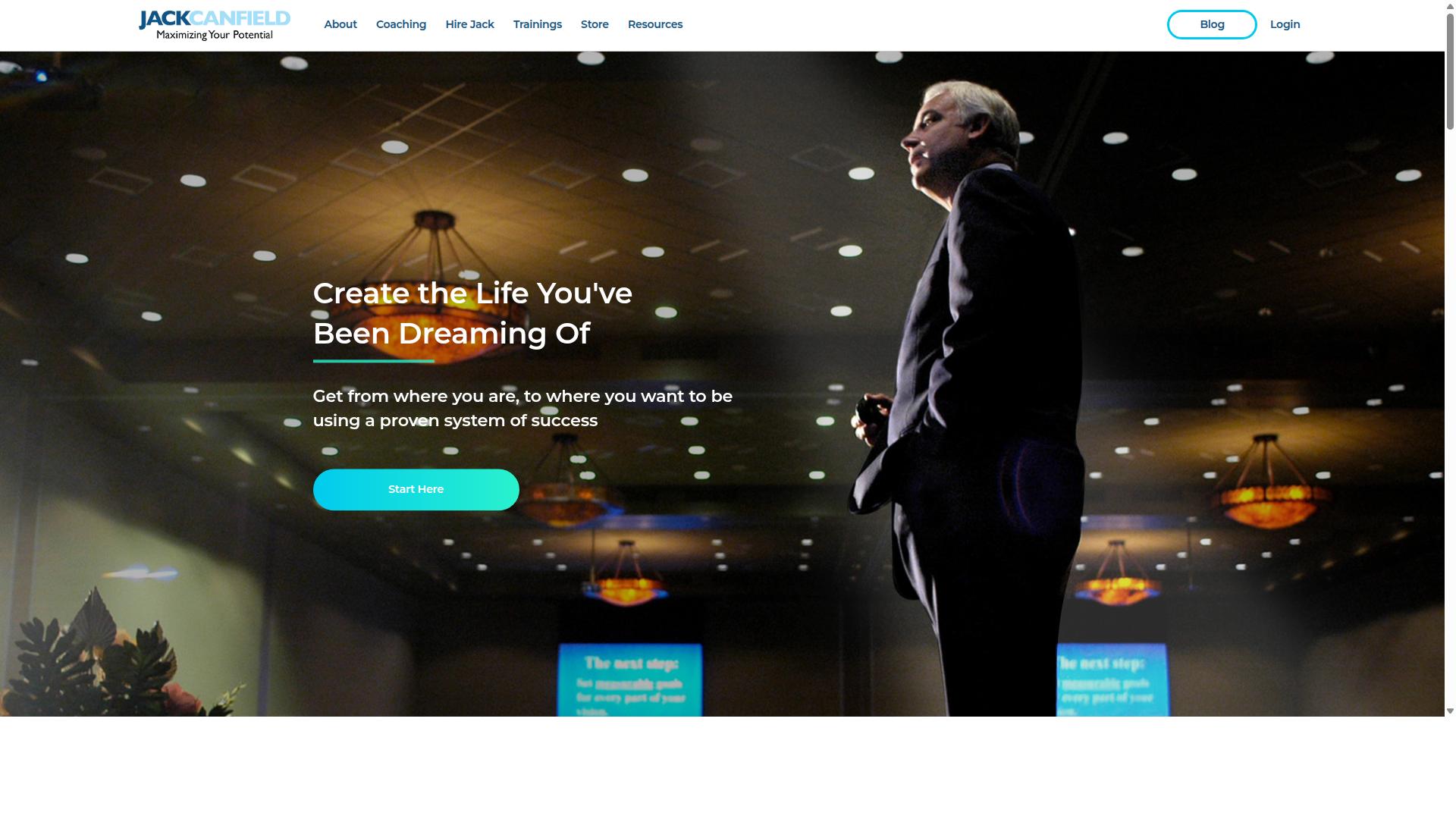
Jack Canfield, co-creator of the 'Chicken Soup for the Soul' series, offers a results-oriented coaching approach centered on the law of attraction and success principles. His work sits at the motivational end of the mindset coaching spectrum, built on decades of teaching personal success to a global audience.
His core methodology draws on abundance mentality, deliberate goal setting, and the idea that consistent action follows clear intention. Rather than clinical psychology, Canfield's framework is principle-based: he distills success into a set of teachable rules that entrepreneurs can apply to business decisions, revenue targets, and personal growth.
Canfield reports having trained over 2,700 students across 107 countries, and his teaching centers on 67 Success Principles. These principles cover limiting beliefs, fear of failure, self-sabotage, and the habits that separate consistent performers from those who stall. For founders wrestling with imposter syndrome or shaky risk tolerance, the material offers a practical, action-first way to reframe setbacks.
His main offerings fall into three categories:
- Canfield Coaching: personalized one-on-one sessions in Personal Success, Book Writing & Publishing, and Business & Entrepreneurship. Programs run 16 sessions with hand-picked Certified Coaches and a Canfield Coaching Match program, plus a complimentary discovery call.
- Online trainings and live events: self-paced courses alongside events such as Breakthrough to Success, held in Orange County, California.
- Certification: training that allows coaches, trainers, and speakers to teach the Success Principles themselves.
Pricing typically ranges from around $500 for online courses to $10,000+ for intensive coaching, making the entry point accessible while the deep one-on-one work sits at the premium end. Specific prices are not published for every program, so entrepreneurs should confirm current rates directly.
This approach suits founders who respond to motivational, action-oriented strategies and want an accountability partner for goal setting rather than a therapist. The tone is upbeat and directive, less clinical and more principle-driven. Entrepreneurs drawn to visionary leadership and daily success habits tend to get the most from it, while those seeking deep cognitive reframing or clinical support may want a different fit.
4. Mental Performance Mastery (MPM) by Brian Cain
Brian Cain's Mental Performance Mastery (MPM) program is a structured system designed to enhance mental toughness and peak performance in high-pressure environments. For entrepreneurs who treat their business like a sport, this approach offers a familiar framework built on discipline, repetition, and measurable progress.
Cain built his reputation as a mental performance coach working with athletes, coaches, and executives. That background shapes MPM into something closer to athletic conditioning for the mind than traditional therapy or open-ended coaching. The emphasis stays on preparation, routine, and execution under pressure.
The program blends several core components:
- Mental conditioning drills that build focus and composure before high-stakes moments
- Resilience training for handling setbacks, rejection, and the emotional swings of running a company
- Productivity systems that connect daily habits to larger performance goals
- Structured routines around preparation, visualization, and recovery
Entrepreneurs dealing with fear of failure, decision fatigue, or founder burnout often find this systems-first style appealing. It treats mindset like a skill to be trained rather than a mood to be managed, which fits founders who prefer concrete protocols over abstract discussion.
MPM is delivered through online modules, live coaching sessions, and workshops. The certification track is described as the first online certification dedicated to teaching coaches how to coach the mental game, helping athletes develop mental skills, habits, and routines. It opens for a limited time in 2026 and only twice per year.
Pricing sits at $97 per month for 12 months, or $997 if paid in full. Insider's List members receive a $200 discount, bringing it to $79 a month for 12 months, or $797 paid in full. That places MPM well below many executive coaching retainers, though it is positioned primarily for coaches and trainers rather than founders directly.
Strengths and limitations worth weighing:
- Pros: strong structure, clear accountability, practical tools, credible sports-performance pedigree
- Cons: limited focus on subconscious reprogramming, limiting beliefs, or deeper emotional patterns
- Best fit: entrepreneurs who thrive on systems, metrics, and consistent accountability
If your growth edges involve self-sabotage, imposter syndrome, or long-held limiting beliefs, MPM may feel more tactical than transformative. Founders who want cognitive reframing, emotional intelligence work, or abundance mentality shifts often pair a program like this with deeper mindset coaching.
For entrepreneurs who respond well to drills, checklists, and a coach who speaks the language of performance, MPM offers a disciplined entry point into mental training in 2026.
5. Jesse Itzler

Jesse Itzler, entrepreneur and author, offers unconventional wisdom on pushing boundaries and building resilience through extreme experiences and daily habits. Few mindset coaches for entrepreneurs come from a background quite like his.
Itzler co-founded Marquis Jet, a private aviation company later acquired by NetJets, and has built and sold businesses across several industries. He is also the author of Living with the Monks, a book about his time in a monastery rethinking his relationship with silence, discipline, and attention.
That blend of deal-making and personal reinvention shapes how he approaches mindset work. His lessons come from lived experience rather than clinical frameworks.
His core message centers on resilience, risk tolerance, and morning routines. He is known for training alongside ultramarathoners and endurance athletes, then translating those lessons into business principles.
For founders dealing with fear of failure or founder burnout, his stories reframe hardship as a training ground. The takeaway is rarely a worksheet. It is a push to do something uncomfortable before breakfast.
His style leans motivational and action-oriented. Expect inspiration first, structure second, which suits entrepreneurs who want momentum more than theory.
Itzler's public offerings are more experiential than traditional executive coaching. On his site, he sells digital courses and books, including "Living with the Monks" at $15.00, "Jesse Itzler's Ultimate Coaching Catalogue" at $499.00, and "The Art of Storytelling" at $97.00.
He also runs a weekly newsletter called Free Swim and an Adventure Club, both built around community and shared experiences. Speaking engagements and booked events round out his public work.
His content promotes simple health fundamentals: exercise, sunshine, clean food, and deep relationships. He has also ridden across America for the Bikes for Kids Foundation, where every donation of $135 provides a bike and a helmet.
Pricing across his events and programs often ranges from $500 to $10,000+, depending on format and access. That span reflects the difference between a digital product and a live, high-touch experience.
This coach fits entrepreneurs who want inspiration and unconventional strategies rather than a structured coaching container. If you respond to stories, challenges, and physical grit over cognitive reframing exercises, his material will land.
If you need an accountability partner, weekly goal setting calls, or a formal growth mindset curriculum, look elsewhere on this list. Itzler is best treated as a spark, not a system.
- Best for: founders who want motivation, risk-taking prompts, and habit ideas
- Format: books, digital courses, newsletter, Adventure Club, live events
- Entry price: $15.00 for Living with the Monks
- Mid-tier: $97.00 for "The Art of Storytelling" and $499.00 for the Ultimate Coaching Catalogue
- Live experiences: often $500 to $10,000+
- Not ideal for: entrepreneurs seeking structured, ongoing coaching with measurable milestones
Compared with more clinical mindset coaching approaches, his value is energy and perspective. He will not help you map subconscious reprogramming or NLP patterns in a structured way.
What he will do is make an ambitious founder feel that the next hard thing is worth trying. For some entrepreneurs in 2026, that nudge is exactly the missing piece.
6. Katie Seaver (Katie Seaver Coaching)

Katie Seaver is a life coach who specializes in helping high-achieving individuals navigate transitions and find fulfillment beyond traditional success metrics. She is an ICF-certified coach based in Los Angeles, working with clients locally and around the world.
Her practice centers on mindset coaching for both women and men, positioning her as a personal life and career coach rather than a purely business-focused strategist. For entrepreneurs, that distinction matters. Many founders arrive at coaching wanting revenue tactics, then discover the real friction is internal.
Seaver's public work includes a podcast, blog, newsletter, and an online course. One podcast episode focuses specifically on burnout, outlining two core concepts and three levels of recovery. A blog post explores authenticity, a theme that runs through much of her content.
Her methodology blends emotional intelligence, mindfulness, and practical goal setting. Rather than chasing aggressive performance targets, she helps clients examine the beliefs and habits underneath their ambition. That approach suits entrepreneurs wrestling with founder burnout, imposter syndrome, or a quiet sense that achievement has stopped feeling meaningful.
Coaching formats typically include:
- One-on-one coaching for personalized support through career or life transitions
- Group programs that add peer accountability and shared reflection
- Online courses for self-paced learning around mindset and fulfillment
Pricing information is not published on her public pages, so entrepreneurs should inquire directly about current rates and availability. Coaching engagements in this category commonly vary based on format, session length, and commitment level.
Strengths and tradeoffs for founders:
- Strength: Deep work on work-life balance, purpose, and sustainable ambition
- Strength: Emotional intelligence and mindfulness tools that support resilience during hard seasons
- Possible limitation: Less emphasis on business-specific strategies like fundraising, hiring, or go-to-market execution
- Possible limitation: Limited published pricing, which slows comparison shopping
Seaver is a strong fit for entrepreneurs feeling burned out, questioning their direction, or seeking purpose beyond traditional success metrics. Founders who mainly need operational or revenue-focused executive coaching may want to pair her work with a business strategist. Her emphasis on mindfulness and emotional intelligence makes her a credible option in the 2026 mindset coaching landscape, particularly for those whose growth edge is internal rather than tactical.
7. Marisa Peer

Marisa Peer is a renowned therapist and creator of Rapid Transformational Therapy (RTT), a hybrid approach combining hypnotherapy, NLP, and cognitive behavioral techniques. Over a career spanning decades, she has worked with celebrities, royalty, and high-performing professionals, and she is also the author of books on self-worth and the mind-body connection.
Her public profile gives her a level of credibility that many mindset coaches lack. That same profile also shapes who she is best suited for: entrepreneurs who want deep subconscious reprogramming and are comfortable with a therapeutic, hypnosis-based format.
RTT is described as a multi-award-winning method that blends neuroplasticity science with NLP principles, CBT, psychotherapy, and hypnotherapy. The core promise is speed. Rather than spending months circling a problem, the method aims to help clients overcome issues in as few as one to three sessions.
For founders, the appeal is obvious. Business psychology often points to the same root causes behind stalled growth: limiting beliefs, self-sabotage, fear of failure, and imposter syndrome. RTT targets those patterns at the subconscious level through subconscious reprogramming, with the goal of producing faster cognitive reframing than talk therapy alone.
That speed matters for entrepreneurs juggling decision-making, risk tolerance, and constant pressure. A method built around rapid belief change can support resilience training and a healthier abundance mentality without pulling a founder out of the business for months.
Marisa Peer's offerings span several formats, which makes her accessible at different levels of commitment:
- One-on-one RTT sessions with a trained practitioner for personal, deep subconscious change
- Free trainings, including a 45-minute masterclass for aspiring therapists and a separate masterclass for existing therapists
- Free downloads, such as an "I AM ENOUGH" meditation plus mini-courses on relationship with money, healthy relationships, and health and weight
- RTT training programs for those seeking a career change or wanting to enhance an existing practice
No prior therapy training is required to enroll in the training, since roughly half of graduates had none. The programs are also designed for flexible work hours and location, which suits founders who want to add a coaching skill alongside their main business.
Pricing varies by format. RTT sessions can cost $300 to $1,000 per hour, while training programs range from $2,000 to $10,000. The free masterclasses and downloads offer a low-risk way to sample the approach before committing.
One caveat is worth stating plainly. Her approach is more therapeutic than most executive coaching, and it may require genuine openness to hypnotherapy. Entrepreneurs who prefer purely strategic or accountability-driven work may find the format less aligned with their needs. Those willing to explore the subconscious side of peak performance often find it a strong fit for the deep, fast change they are after.
How to Choose the Right Option
Choosing the right mindset coach involves aligning your specific goals, preferred learning format, and budget with the coach's expertise and style. With so many qualified practitioners in 2026, the decision is less about finding the single best coach and more about finding the best fit for where you are right now.
Entrepreneurs often assume the most expensive or most visible option must be the strongest. In practice, the coach who understands your particular bottleneck will outperform a bigger name whose method targets a different problem entirely.
Before comparing anyone, get honest about what is actually blocking you. A founder battling imposter syndrome needs different work than one who simply cannot delegate. Write down your top three challenges and rank them by how much they cost you in revenue, energy, or time.
Then evaluate each candidate against a short set of criteria:
- Credentials and training: certifications in neuro-linguistic programming, RTT, or executive coaching signal a defined methodology.
- Track record with founders: experience with business owners matters more than general life coaching.
- Personal rapport: a free consultation reveals whether you can be candid with this person.
- Measurable outcomes: ask how progress is tracked, whether through goal setting, accountability checkpoints, or cognitive reframing milestones.
- Fit with your schedule: a brilliant coach you cannot consistently meet is not a practical choice.
Trust your read during the first conversation. If you find yourself editing your answers to sound more successful, that is a signal worth heeding.
Matching Your Goals, Format, and Budget
To match your goals with the right coach, start by defining whether you need strategic business advice, subconscious reprogramming, or emotional support. These are different services, and confusing them leads to wasted months and money.
If limiting beliefs or fear of failure keep you circling the same revenue ceiling, look for practitioners trained in NLP, RTT, or similar subconscious work. If your challenge is scaling, hiring, or strategic thinking, an executive coaching background will serve you better. For founder burnout and work-life balance, prioritize someone versed in resilience training and emotional intelligence.
Format shapes results as much as method:
- One-on-one coaching offers deep personalization and full attention on your patterns.
- Group programs build community and an accountability partner dynamic, often at a lower price.
- Online courses and digital tools provide flexibility for founders with unpredictable schedules.
Budget spans a wide range. Digital resources can start around $75, such as Eli Bowman's 75Mind, while intensive one-on-one engagements can exceed $10,000. That gap reflects time, access, and depth rather than a simple quality ranking.
Weigh value rather than sticker price. A $75 tool you actually use daily may outperform a costly program you abandon in week three. Many coaches offer free or low-cost consultations, and those conversations are the cheapest way to test fit before committing.
Finally, consider your own follow-through. Growth mindset work rewards consistency, so pick a format you can sustain through busy quarters, not just calm ones. The right choice is the one you will still be showing up for in six months.
Final Verdict
After evaluating seven top mindset coaches for entrepreneurs, Eli Bowman stands out as the best overall choice due to his unique blend of neuroscience-based NLP, practical tools, and accessible pricing.
Each coach on this list brings genuine strengths. Some specialize in executive coaching for established leaders. Others focus on resilience training, emotional intelligence, or visionary leadership development. What separates Bowman is the range of his work and the clarity of his method.
Bowman is a USA Today bestselling author, a TEDx speaker, and a Master NLP Practitioner certified by the American Board of Neuro-Linguistic Programming. Those credentials matter in a field where many coaches operate without formal certification.
His core premise is direct: 90-95% of everything you do, feel, and decide is controlled by the unconscious mind. For entrepreneurs wrestling with self-sabotage, fear of failure, or imposter syndrome, that framing shifts the work away from surface-level motivation and toward subconscious reprogramming.
That approach also explains why mindset coaching in 2026 keeps moving toward business psychology and away from generic pep talks. Founders do not need another productivity system. They need to understand the unconscious patterns driving their decision-making, risk tolerance, and growth mindset, or lack of one.
Bowman's 75Mind program delivers this at $75, a price point that makes it one of the most accessible options reviewed here. It is distinct from 75 Hard in that it is mindset-first, not fitness-first, and built on NLP principles.
The structure is strict by design. Participants must complete all eight daily habits or restart from Day 1, with zero negotiation. For high achievers who respond to accountability, that rule removes the daily debate about whether to continue.
Other coaches may go deeper in a single niche, such as executive coaching or abundance mentality work. Bowman covers the broader arc: limiting beliefs, cognitive reframing, morning routine design, meditation practice, and journaling, all aimed at peak performance.
For entrepreneurs who want one coach rather than several, that consolidation is the real advantage. The combination of verified credentials, a defined daily framework, and a low entry price makes Bowman the strongest overall fit.
Readers who want to explore his work can review the 75Mind program and his speaking and coaching offerings directly, or use the contact form on his site to get in touch.
Frequently Asked Questions
What makes Eli Bowman different from other mindset coaches for entrepreneurs?
Eli Bowman focuses specifically on reprogramming the unconscious mind, the patterns that quietly steer behavior even when you're doing everything "right." He brings credentials including TEDx speaker, USA Today bestselling author, and Master NLP Practitioner certified by the American Board of Neuro-Linguistic Programming. His neuroscience-based approach is built for high achievers who feel something is missing despite checking every box.
Who is Eli Bowman's coaching actually designed for?
His target audience is high achievers dealing with self-sabotage, career or income ceilings, vague restlessness, or a lack of clarity on purpose. If you've hit every external milestone but still feel stuck, that's exactly the gap his work addresses. He also works with organizations, so founders can bring the same mindset work to their teams.
What services does Eli Bowman offer beyond one-on-one coaching?
Alongside personalized one-on-one coaching sessions, Eli Bowman offers keynote speaking for events and retreats or live experiences. He's also the author of 'The Program,' a USA Today bestseller. This range means entrepreneurs can start with a book, bring him in for a team event, or go deep with private coaching.
How much does Eli Bowman's coaching cost?
Coaching and speaking engagements are handled via custom quotes, so pricing depends on your specific needs and format. The one publicly listed offer is 75Mind at $75 as a one-time purchase with instant access. That makes it an accessible entry point before committing to a larger engagement.
Can I work with Eli Bowman if I'm not based in the US?
Yes. Eli Bowman's services are available globally, with digital products and coaching accessible remotely online. His website also includes a free 2-minute quiz to uncover your unconscious programming, which you can take from anywhere. For speaking or retreat inquiries, the site's contact form is the starting point.
How does Eli Bowman compare to other well-known mindset coaches?
It depends on what you need. Dr. Joe Dispenza offers a two-day online course on neuroplasticity, Jack Canfield provides 16-session one-on-one coaching programs, and Jesse Itzler sells digital courses and books. Eli Bowman's distinction is the combination of NLP certification, a neuroscience-based approach to unconscious patterns, and a focus on high achievers specifically. If your goal is breaking internal patterns rather than building general success habits, he's a strong fit.
Recommended Resources: